GLOBAL & NATIONAL SCALE WORK
Our long-term ambition is to operate across multiple regions worldwide -strengthening circular systems, reducing plastic waste and pollution, and enabling communities to thrive through science-driven, community-led action.
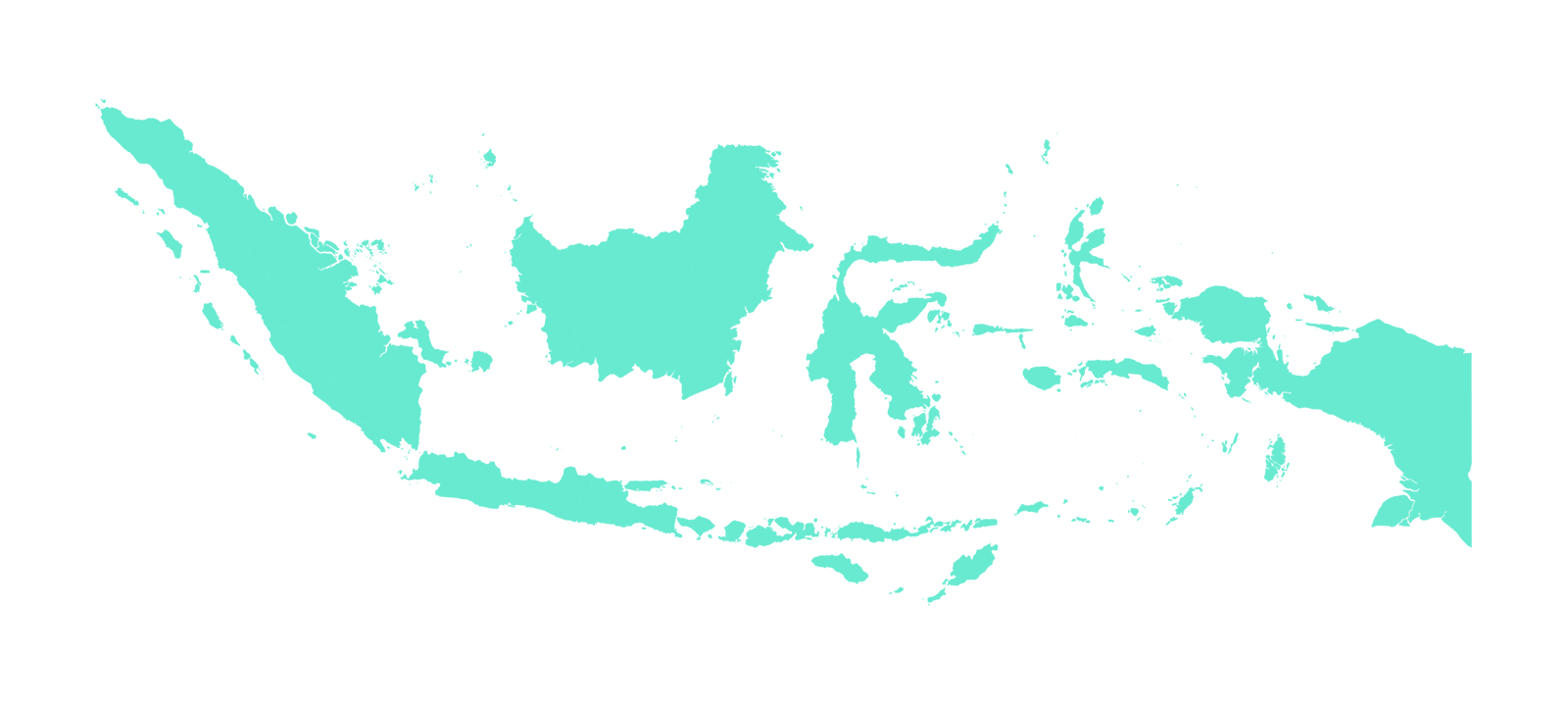
In Indonesia, our national-scale studies, as part of the PISCES Research program (link to archive), identified regions across almost all provinces with varying levels of predicted plastic pollution. These locations represent Indonesia’s social, cultural, ecological, and economic diversity, providing insight into how circular solutions can work in different contexts – from dense urban centres to coastal, peri-urban and rural communities.
REGIONAL & LOCAL SCALE WORK
At the regional scale, we focus on locations with high strategic importance to the countries and organisations we work with.
In Indonesia our PISCES Research program focused on
- East Java — one of Indonesia’s most populated, economically dynamic regions
- Bali — a globally recognised tourism hub with significant coastal pressures
Within each province, two contrasting sub-district case study sites were selected. These represented different socioeconomic settings, waste system capacities, and ecological conditions. They also allowed us to build on existing work with local partners and ongoing waste management programmes.
PISCES LIVING LABS
We trialled the world’s first PISCES Living Lab in Banyuwangi East, Java, Indonesia. We currently run labs at several case study locations (in Bali, Bandung and the UK ) serving as real-world testbeds where researchers, communities, government, and enterprises co-design, trial, and refine cross-value-chain solutions to:
- avoid unnecessary plastics
- reduce consumption
- expand refill and reuse options
- improve collection, sorting, and recycling
These Living Labs combine behavioural research, technology, policy co-creation, and enterprise innovation to accelerate system-wide change.
PISCES Relay Case Study Sites
From these sites – and in collaboration with national partners — we conduct:
- detailed plastic waste and litter monitoring and impact assessments
- Living lab behaviour change programmes
system analysis across the plastic value chain - identification of the most effective intervention points
- evaluation of environmental, economic, social and cultural outcomes
- circular plastics economy training programmes
This multi-scale approach enables PISCES Relay to generate insights that are locally grounded, nationally scalable, and globally transferable.