
PISCES PROGRAMME STRUCTURE
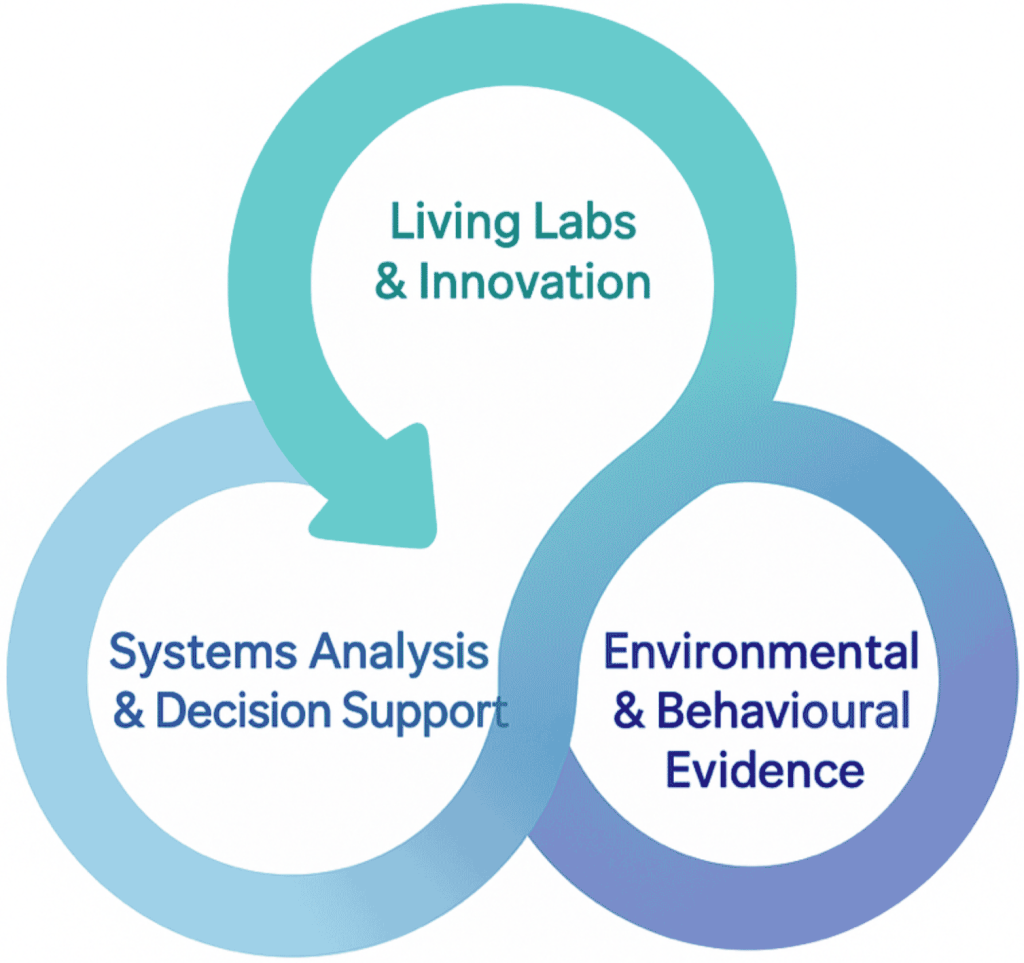
PISCES Relay integrates a toolbox of research, design and evaluation methods developed through the PISCES Research Programme. These methods help us understand the plastics system, co-design solutions, and evaluate their impact in real contexts. Our approach combines three interconnected modes of work:
- Systems Analysis & Decision Support (Understanding sources, flows and drivers)
- Material Flow Analysis (MFA)
- Stakeholder and power dynamics analysis
- Multidimensional value and systems-dynamics modelling
- Multi-criteria sustainability and decision-making analysis
- Modelling the sources and pathways of plastic litter and waste
- Econometric modelling of action and inaction to support policy and investment
- Living Labs & Innovation (Designing, testing and refining solutions)
- Co-design tools and participatory methods
- Innovation design and rapid prototyping
- User testing and iterative refinement
- Piloting reuse, reduction and replacement systems
- Environmental & Behavioural Evidence (Measuring impacts and understanding change
- Rapid field measurement of plastic pollution
- Monitoring of targeted interventions
- Ocean particle tracing
- Marine habitat mapping
- Risk assessment of coastal ecosystems and wellbeing
- Mixed-methods social and behavioural data collection
- Communication tools and media for engagement
PISCES Relay builds on the foundations of the PISCES Partnership and Research Programme to deliver practical, evidence-based pathways for reducing plastic pollution at source. Aiming to support real change in government policies, industrial practices, and consumer behaviour, our cross-sector partnering and systems based approach helps regions develop circular, resilient and waste-free futures and cleaner, revitalised oceans.
PISCES Relay works across three interconnected modes of research, innovation and evidence. These loops are not steps or stages, but continuous, reinforcing processes that help us understand why plastics leak, design and test solutions in context, and support long-term circular change.
Below are our current projects
